
You’ll find that cinema’s most clinically accurate portrayals of cocaine addiction reveal how the drug systematically dismantles professional achievement, family bonds, and psychological stability across vastly different socioeconomic contexts. From Tony Montana’s paranoid deterioration to Marion’s desperate theft, these films document addiction’s neurobiological consequences: dopamine dysregulation, eroded judgment, escalating criminality, and complete identity dissolution. They’re not merely entertainment; they’re diagnostic case studies. Exploring these seven films uncovers the specific mechanisms through which addiction rewires behavior and destroys lives.
Scarface (1983): The Downward Spiral of Tony Montana
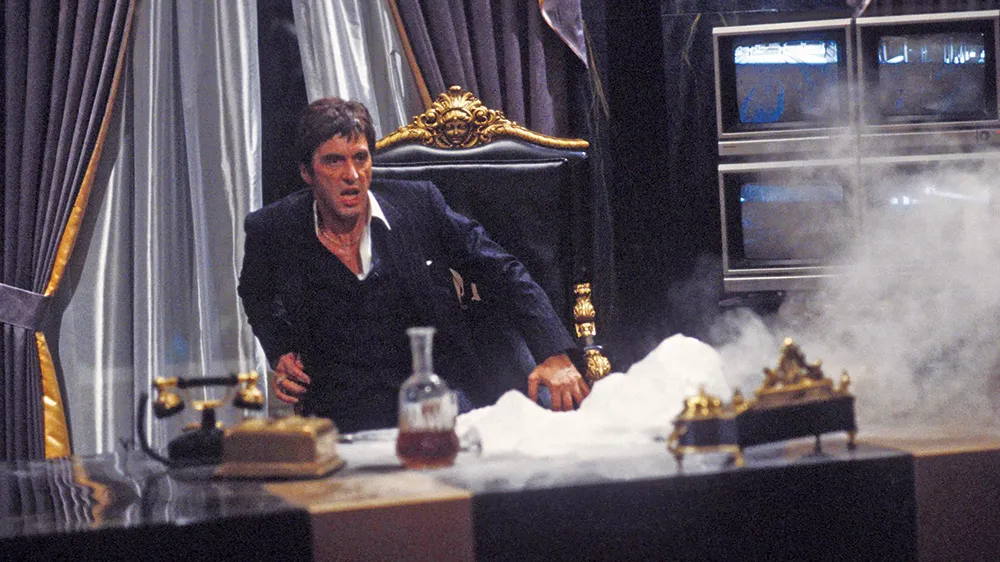
Brian De Palma’s *Scarface* consistently examines cocaine addiction through Tony Montana’s transformation from economically desperate immigrant to criminally isolated drug lord. You witness his rapid ascent fueled by the cocaine trade, which promises wealth but delivers psychological deterioration. Tony exhibits narcissistic and antisocial traits that intensify under substance abuse, manifesting as paranoia and aggression. His relationship disintegration accelerates as cocaine dependency overtakes rational judgment. You observe moral decay throughout the narrative, from dishwasher to cartel enforcer to paranoid addict. The climactic scenes depict excessive cocaine use that obliterates self-preservation instincts. During filming, the production used powdered milk as cocaine, which created practical challenges for the actors portraying addiction’s physical toll. Oliver Stone’s screenplay, informed by personal addiction recovery and immersive research with traffickers, grounds the portrayal in clinical reality. De Palma’s direction captures the operatic intensity of addiction’s psychological unraveling, moving beyond mere surface depiction to explore the interior collapse of Montana’s mind. Ultimately, you’re confronted with Tony’s violent death, deglamorizing cocaine trafficking and illustrating addiction’s inevitable consequences.
Blow (2001): From Smuggler to Prisoner
Ted Demme’s *Blow* chronicles George Jung’s trajectory from marijuana trafficker to cocaine kingpin, documenting how substance abuse and criminal enterprise became inseparable forces in his downfall. You witness Jung’s escalating addiction intensify reckless decision-making, culminating in a drug-related heart attack that temporarily halted operations. The film portrays devastating family betrayals, Mirtha’s cooperation during a traffic stop triggers his three-year incarceration and child custody loss. Jung’s compulsive engagement with narcotics fuels violent outbursts and repeated parole violations. Financial ruin follows confiscation of assets, leaving him destitute after commanding approximately 85% of U.S. cocaine supply during the late 1970s. The film’s soundtrack, featuring tracks from the 1950s to 1970s, underscores the era in which Jung’s criminal enterprise flourished and eventually collapsed. In prison, Jung’s partnership with Diego introduced him to the cocaine trade, fundamentally reshaping his criminal trajectory and establishing his connection to the Medellín Cartel. The film demonstrates how Jung’s violation of parole by traveling to Colombia deepened his involvement with the cartel’s most dangerous operations. *Blow* illustrates how addiction systematically dismantles the criminal empire, transforming unprecedented wealth into imprisonment and irreversible personal devastation.
The Wolf of Wall Street (2013): Cocaine Among the Elite

Where *Blow* documented cocaine’s destruction of a criminal enterprise from within, Martin Scorsese’s *The Wolf of Wall Street* inverts the narrative by depicting cocaine as a functional tool of elite capitalism, integrated into boardrooms, trading floors, and luxury penthouses rather than undermining them. You’ll observe how the film portrays drug use as normalized within destructive industry practices, where brokers snort cocaine during trading hours to maintain competitive edge. The Matthew McConaughey dinner scene crystallizes this dynamic: cocaine becomes inseparable from elite social status and deal-making rituals. Scorsese stylizes excess through lingering shots and comic delivery, aestheticizing rather than condemning the behavior. Based on Jordan Belfort’s memoirs and corroborated by FBI investigations, these scenes depict authentic Wall Street culture where substance abuse functioned as operational currency among the privileged. The film’s runtime of approximately 3 hours allows Scorsese to thoroughly chronicle the psychological and physical deterioration that accompanies sustained cocaine use at this level. Belfort’s extensive cocaine abuse, along with his use of Quaaludes, morphine, and Xanax, demonstrates how the film grounds its depiction of addiction in the documented behavior of actual financial criminals.
Goodfellas (1990): Crime, Paranoia, and Addiction
You’ll observe Henry Hill’s cocaine addiction catalyze a psychological unraveling marked by acute paranoia, hypervigilance, and erratic decision-making that destabilizes his criminal enterprise from within. His escalating drug use directly precipitates the betrayal of mob hierarchy, fractures his marriage through confrontational conflict, and accelerates law enforcement’s systematic dismantling of his network. The film clinically depicts how substance dependency collapses social structures, relationships, and personal agency, culminating in witness protection as the only viable outcome of addiction’s trajectory. Martin Scorsese’s directorial vision emphasizes the exhilaration of the lifestyle while simultaneously exposing how that same thrill becomes inseparable from the self-destruction that addiction breeds. Ray Liotta’s portrayal captures Henry as coming apart at the seams, with frantic voiceover and wild-eyed desperation conveying the mounting psychological strain. The graphic depiction of brutal violence and drug use reinforces how addiction strips away moral restraint and transforms individuals into threats to those closest to them.
Henry’s Descent Into Paranoia
As Henry’s cocaine dependency intensifies throughout the film, his psychological state deteriorates into acute paranoia characterized by hallucinations, hypervigilance, and cognitive fragmentation consistent with stimulant-induced psychosis.
You’ll observe three critical manifestations of his decline:
- Perceptual distortions: Henry experiences persistent hallucinations, particularly believing a helicopter follows him during routine activities, reflecting cocaine-induced delusional thinking. The filmmakers employ jump-cutting and rapid editing to visually represent the fragmented, accelerated thought patterns characteristic of cocaine intoxication.
- Behavioral disorganization: His erratic schedule fragments across crime, family obligations, and drug deals, showcasing impaired executive function and decision-making typical of stimulant psychosis.
- Interpersonal dysfunction: Worsening paranoia drives him to suspect associates and loved ones, severing relationships and eliminating his operational support network.
The film’s handheld camera work, rapid editing, and frenetic pacing cinematically mirror Henry’s subjective experience of sensory overload and cognitive fragmentation, creating an immersive depiction of stimulant-induced psychological deterioration.
Cocaine-Fueled Criminal Escalation
Henry’s cocaine addiction doesn’t merely intensify his paranoia, it fundamentally restructures his criminal behavior, pushing him beyond traditional mob boundaries into increasingly reckless and dangerous territory. You witness how his drug trafficking directly violates mafia orders, yet he pursues profits with compulsive determination. This defiance triggers catastrophic financial consequences: he loses $60,000 worth of cocaine to evidence avoidance, draining resources and forcing desperate illegal activities. Simultaneously, you observe the loss of loyalty among associates as paranoia-driven violence erupts. His operational security deteriorates as impulsive decisions replace careful planning. The financial collapse and internal betrayals accelerate his criminal unraveling, ultimately forcing him toward federal cooperation. His addiction fundamentally corrupts traditional mob codes, replacing loyalty and discipline with survival-driven desperation. His drug-addled mind becomes reflected in his inability to distinguish between genuine threats and imagined conspiracies, causing him to suspect Conway of setting him up for elimination when his judgment is already compromised by substance abuse.
Relationships Destroyed by Addiction
While Henry’s criminal ascent dominates *Goodfellas*, the film’s most harrowing portrait emerges in his domestic sphere, where cocaine addiction systematically dismantles his marriage and family stability. The strained family dynamics intensify as Henry’s paranoia and aggression escalate, creating a devastating emotional impact on his spouse and children.
The film clinically documents how cocaine use destroys relationships:
- Eroded trust through deception and manipulation surrounding drug procurement and usage patterns
- Financial instability resulting from addiction expenditures, neglecting household obligations and child support responsibilities
- Escalating domestic volatility marked by verbal abuse, emotional manipulation, and threatening behavior during intoxication and withdrawal states
Henry’s fractured home life illustrates how addiction corrodes intimate bonds, replacing communication with defensiveness and isolation. His family becomes collateral damage in addiction’s psychological and relational devastation. Research demonstrates that marital status and relationship quality significantly influence substance-use outcomes, suggesting that Henry’s deteriorating marriage accelerates his addiction trajectory. Henry’s dilated pupils and erratic behavior during binges signal the physiological signs that accompany his psychological unraveling, making his addiction visible to those closest to him.
Clean and Sober (1988): The Professional’s Struggle
Michael Keaton’s portrayal of Daryl Poynter exposes how addiction doesn’t discriminate; it devastates high-functioning professionals with the same clinical precision it does anyone else. You’ll witness a real estate salesman whose cocaine dependency triggers embezzlement, theft, and catastrophic financial ruin. Daryl’s initial rehab entry stems from self-preservation rather than genuine recovery motivation, a diagnostic indicator of denial’s grip on addicted professionals. Throughout treatment, you’ll observe his resistance to accepting personal accountability, a defense mechanism that delays therapeutic progress. His professional’s guilt intensifies when a woman dies from an overdose in his bed, yet he externally blames circumstances rather than confronting his addiction directly. The film’s clinical realism demonstrates how substance abuse systematically dismantles career credibility, legal standing, and interpersonal trust simultaneously. Under the guidance of counselor Craig, Daryl gradually begins to accept his substance abuse problem and commits to genuine recovery rather than mere damage control.
Basketball Diaries (1995): Teen Addiction and Consequences
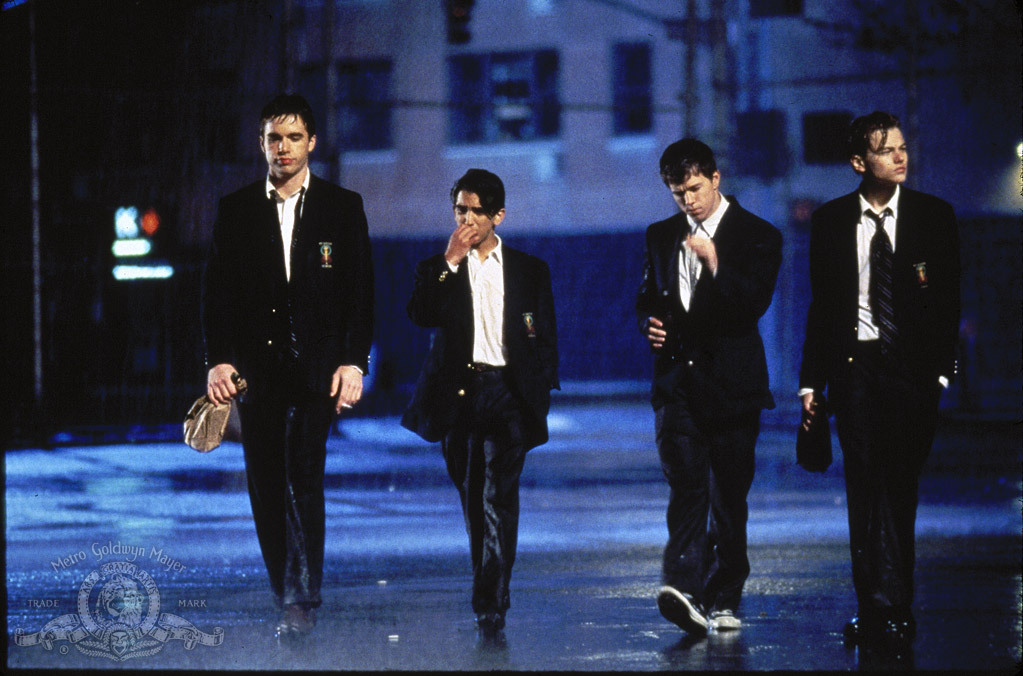
The Basketball Diaries shifts focus from the professional’s compartmentalized descent to adolescent addiction’s more explosive trajectory. You’ll observe how Jim Carroll’s memoir-based narrative documents addiction’s neurobiological acceleration during developmental years, when impulse control remains underdeveloped.
The film clinically demonstrates three critical addiction markers:
- Rapid functional deterioration: athletic prowess dissolves as dopamine dysregulation overrides motivation and motor coordination
- Addiction-driven criminal behavior: theft, assault, and prostitution emerge as instrumental responses to sustain drug procurement
- Institutional rejection cascades: school expulsion and team removal eliminate prosocial structures, accelerating social isolation
Carroll’s trajectory illustrates how adolescent brains’ heightened reward sensitivity amplifies addiction’s grip. You’re witnessing not gradual decline but precipitous collapse, hallucinations, withdrawal syndromes, and homelessness materializing within months. The film substantiates addiction’s chronic relapsing nature, particularly without sustained therapeutic intervention, positioning it as a legitimate clinical portrayal of teenage substance use disorder’s devastating consequences.
Requiem for a Dream (2000): Addiction’s Psychological Toll
Darren Aronofsky’s *Requiem for a Dream* departs from singular addiction narratives to examine how substance dependency and behavioral compulsion systematically dismantle psychological integrity across four distinct individuals. You witness Sara’s amphetamine-induced psychosis manifesting as hallucinations and paranoia, while Harry, Marion, and Tyrone experience escalating desperation and anxiety. The film employs distorted visuals, fish-eye lenses and fragmented montages to induce your empathy for their altered states. Character disconnection intensifies as isolation erodes relationships and personal values. Mental fragmentation accelerates through rapid-fire editing that simulates drug “hits,” compressing time while mirroring neurological deterioration. The color palette shifts and sound design warps, reinforcing psychological disintegration. You observe not merely substance abuse but the complete dissolution of identity, agency, and reality itself, positioning addiction as fundamentally dehumanizing.
Frequently Asked Questions
How Accurate Are These Films Compared to Real Cocaine Addiction Medical Literature?
You’ll find these films moderately accurate regarding cocaine’s biological impacts. They correctly depict dopamine-driven euphoria, paranoia in 68, 84% of users, and cardiovascular events. However, you should note they often dramatize withdrawal symptoms as life-threatening, when medical consensus indicates withdrawal rarely poses direct medical danger. You’re shown relationship deterioration and compulsive use patterns accurately, though films frequently underrepresent prolonged psychological withdrawal phases and co-occurring psychiatric disorders documented in clinical evidence.
Which Movies Are Most Suitable for Educational or Therapeutic Addiction Recovery Programs?
You’ll find that “Clean and Sober,” “Rocketman,” and “Beautiful Boy” work best in therapeutic settings because they’re grounded in evidence-based counseling approaches. These films effectively demonstrate how robust support networks facilitate recovery. You’ll notice each movie authentically portrays addiction’s clinical progression while emphasizing resilience and hope. They’re particularly valuable because they’re clinically sound, showing relapse as part of recovery rather than failure. You can use them to facilitate meaningful group discussions about triggers and coping strategies.
Do These Films Inadvertently Glamorize Cocaine Use Despite Depicting Negative Consequences?
Yes, you’re likely experiencing conflicting messaging. Despite depicting negative consequences, films often prioritize stylized cinematography and charismatic protagonists, which can overshadow addiction’s destructive reality. Social media’s impact amplifies glamorous scenes while minimizing health deterioration. You’ll find that addiction’s stigmatization worsens when screenwriting emphasizes criminal drama over clinical consequences, paranoia, cardiovascular damage, and withdrawal symptoms remain underrepresented. This diagnostic gap creates problematic audience interpretation, potentially normalizing cocaine use regardless of intended cautionary framing.
How Have These Movies Influenced Public Policy Discussions on Drug Addiction?
You’ve witnessed these films shape policy makers’ perspectives on addiction as a medical condition rather than purely criminal behavior. They’ve catalyzed public awareness campaigns emphasizing rehabilitation over punishment. By depicting cocaine’s neurobiological and psychological consequences realistically, you’ve seen filmmakers inform evidence-based policy debates around sentencing reform, treatment accessibility, and harm reduction strategies. You’re observing how clinical portrayals have driven legislative discussions prioritizing intervention programs and destigmatizing substance use disorders in healthcare systems.
What Cinematic Techniques Most Effectively Convey the Psychological Experience of Addiction?
You’ll find that sensory immersion techniques most effectively convey addiction’s psychological experience. Filmmakers employ distorted soundscapes, desaturated visuals, and disorienting editing patterns that clinically replicate altered perception and withdrawal symptoms. Character development nuance, depicting the cyclical contrast between euphoric highs and desperate lows, grounds the narrative in diagnostic reality. Subjective camera angles and fragmented narration immerse you directly in the addict’s compromised cognition, creating authentic neurobiological representation rather than romanticized depiction.