When you drink alcohol, your body launches multiple pain-triggering mechanisms. Inflammatory cytokines flood your joint capsules, while alcohol’s diuretic effect depletes synovial fluid and reduces cartilage cushioning. If you’re prone to gout, alcohol spikes uric acid levels by impairing renal clearance. Chronic drinking can also damage peripheral nerve sheaths, causing burning or stabbing sensations in your legs. Understanding each pathway helps you identify which mechanism’s behind your specific symptoms.
How Alcohol Triggers Inflammation in Your Joints
When you drink alcohol, your body initiates a cascade of inflammatory responses that directly target joint tissues. Alcohol triggers production of pro-inflammatory cytokines within your joints, including IL-6 and TNF-alpha. These signaling molecules activate immune cells that attack healthy cartilage and synovial membranes.
Chronic alcohol consumption amplifies this damage considerably. Your chondrocytes experience disrupted signaling through PKCδ and MAPK pathways, which normally maintain cartilage homeostasis. This disruption suppresses protective mediators like TIMP-3 and SOX-9 while elevating destructive enzymes such as MMP-13 and ADAMTS-5. For those with gout, alcohol poses additional risks since beer, wine, and liquor contain high amounts of purine, a compound that triggers painful gout attacks. Research shows that alcohol consumption also generates reactive oxygen species, leading to systemic oxidative stress that further damages joint tissues.
Joint inflammation worsens as alcohol metabolites circulate systemically. Your body’s immune response intensifies, concentrating inflammatory mediators in weight-bearing joints. This creates a self-perpetuating cycle where each drinking episode compounds existing tissue damage and accelerates cartilage degradation.
The Connection Between Drinking and Gout Flare-Ups
Beyond general joint inflammation, alcohol directly triggers gout, a particularly painful form of inflammatory arthritis caused by uric acid crystal deposition. When you drink, your liver produces lactate during alcohol metabolism, which competes with uric acid for kidney excretion. This competition reduces uric acid clearance, causing serum levels to spike.
Beer poses the greatest risk for gout flare-ups because it contains high purine levels, particularly guanosine, that convert directly to uric acid. However, wine and spirits also impair renal uric acid handling. Research indicates that alcohol intake as a trigger is reported by 14.18% of gout patients, making it nearly 10% higher than other common triggers like red meat consumption or dehydration.
If you’re wondering why do my legs hurt after drinking, gout may explain that intense, localized pain, especially in your big toe, ankle, or knee. Research shows consuming more than one to two drinks within 24 hours increases recurrent attack risk by 36%. This alcohol joint pain typically peaks within hours of drinking. For those already diagnosed with gout, doctors recommend eliminating alcohol completely to prevent painful flare-ups and reduce symptom severity.
Dehydration and Its Impact on Joint Lubrication
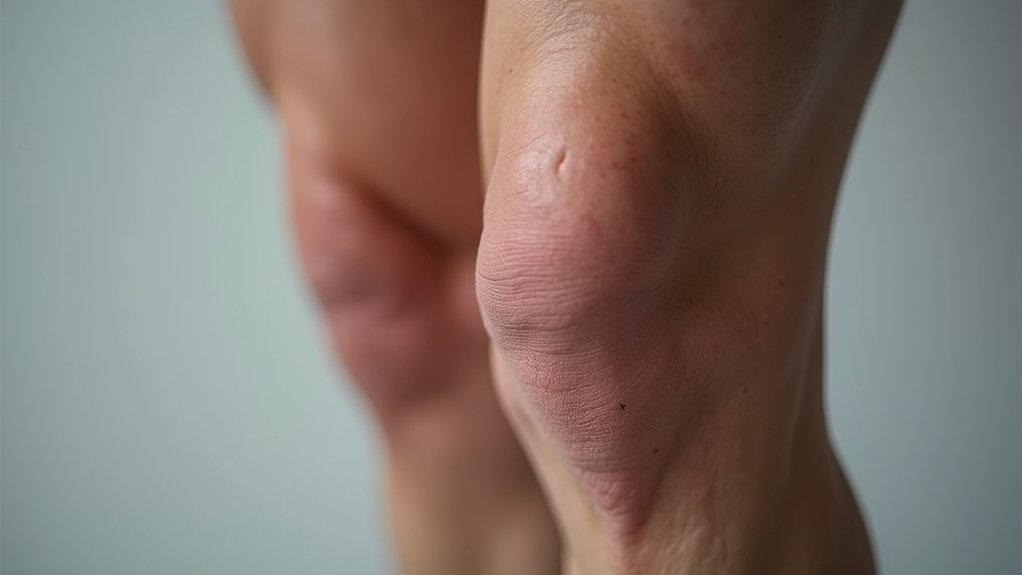
Adequate hydration plays a critical role in maintaining joint health, and alcohol’s diuretic effect directly undermines this protection. When you drink, your body loses fluid rapidly, reducing synovial fluid volume and compromising joint lubrication. This fluid normally allows bone surfaces to glide smoothly without grinding.
Your cartilage water content typically ranges from 65-80%, making it highly vulnerable to dehydration. When fluid levels drop, cartilage loses its cushioning capacity and becomes prone to compression damage. Synovial fluid thickens, decreasing its shock-absorbing properties and increasing mechanical friction between joint surfaces. Chronic dehydration can ultimately cause joint degeneration over time.
Dehydration also impairs toxin clearance, allowing inflammatory byproducts to accumulate around your joints. This triggers swelling, stiffness, and heightened pain perception. You’ll notice these effects most during weight-bearing activities like walking or climbing stairs after drinking. You may also experience morning stiffness that takes longer than usual to resolve as your joints struggle to regain proper lubrication. This discomfort can also manifest as understanding chills after drinking, where the body reacts to the lack of hydration by triggering a stress response. Over time, chronic dehydration can lead to more severe joint issues and decreased mobility, further complicating everyday activities.
Alcoholic Neuropathy and Nerve-Related Pain
When you drink heavily over time, alcohol directly damages your nerve sheaths, the protective myelin coating around peripheral nerves, disrupting normal signal transmission and causing burning, tingling, or stabbing pain in your feet and legs. You’ll typically notice these extremity pain symptoms in a “stocking-glove” pattern, starting in your toes and progressing upward as the longest nerves sustain the most damage. Chronic alcohol use also impairs your body’s absorption of thiamine and other B vitamins, creating malnutrition-related nerve toxicity that compounds the direct neurotoxic effects and accelerates nerve degeneration. An estimated 66% of individuals with chronic alcohol abuse may develop alcoholic polyneuropathy, making it one of the most common complications of long-term drinking. While some nerve function may be restored with early intervention and complete abstinence, permanent nerve damage is likely in many cases of advanced alcoholic neuropathy.
Nerve Sheath Damage
Up to 66% of chronic heavy drinkers develop some form of alcoholic polyneuropathy, making it one of the most common toxin-related nerve disorders. When you consume alcohol chronically, it directly damages your peripheral nerves’ myelin sheaths, the protective coverings that insulate nerve fibers and enable proper signal transmission.
Nerve sheath damage occurs through multiple mechanisms. Alcohol generates oxidative stress and inflammation that degrade myelin and injure Schwann cells responsible for sheath maintenance. You’ll also experience impaired neuronal energy metabolism, particularly affecting long nerves in your legs. Chronic alcoholics often suffer from thiamine deficiency, which further contributes to the development and progression of this nerve damage.
This damage explains why leg pain after drinking often feels like burning, shooting, or throbbing sensations. Bone pain after alcohol may actually originate from compromised nerve sheaths rather than skeletal structures. The resulting sensory disruption can mimic deep musculoskeletal pain throughout your lower extremities. As the condition progresses, you may experience muscle weakness and difficulty moving, which can significantly impact your mobility and daily activities.
Extremity Pain Symptoms
Alcoholic neuropathy affects your extremities through a distinctive pattern of sensory, motor, and autonomic dysfunction that typically begins in the feet and progresses upward. You’ll experience burning, sharp, or throbbing pain in a stocking-glove distribution, often accompanied by numbness, tingling, and hypersensitivity to light touch or temperature changes.
When your legs feel sore after drinking, the underlying nerve damage may manifest as muscle weakness, cramps, and eventual atrophy in intrinsic foot muscles. This progression leads to gait disturbances and increased fall risk. If your joints hurt after drinking, autonomic fiber involvement can alter peripheral blood flow, exacerbating discomfort and delaying tissue healing. Autonomic dysfunction can also cause gastrointestinal symptoms including constipation, diarrhea, and difficulty urinating.
Advanced neuropathy causes foot drop, impaired fine motor control in hands, and profound sensory loss that prevents detection of injuries, ulcers, or infections in affected extremities. Early diagnosis and treatment can significantly improve your chances of nerve recovery and prevent permanent damage.
Malnutrition-Related Nerve Toxicity
Because chronic alcohol consumption impairs intestinal absorption and depletes essential nutrients, your peripheral nerves become vulnerable to a dual assault: direct ethanol toxicity and malnutrition-induced damage. Thiamine (B1), folate, and vitamins B12 and E become critically depleted, disrupting nerve cell metabolism and myelin sheath integrity.
This nutritional deficit accelerates peripheral nerve degeneration. You’ll experience symptoms in a characteristic stocking-glove distribution, with burning, tingling, and numbness starting in your feet and hands before spreading proximally. Up to 66% of chronic alcohol abusers develop alcoholic polyneuropathy through these combined mechanisms.
Your motor nerves also suffer, causing muscle weakness, cramps, and potential foot drop. Autonomic dysfunction may produce digestive disturbances and blood pressure irregularities. Early intervention through alcohol cessation and nutritional supplementation can halt progression, though existing nerve damage often remains permanent. With proper treatment, individuals can achieve partial or full recovery, depending on the extent and duration of their alcohol use. Engaging in a structured medical detox program can provide the necessary support and resources for individuals seeking to overcome alcohol dependence. These programs often include medical supervision to manage withdrawal symptoms and psychological counseling to address underlying issues related to addiction.
Long-Term Effects of Alcohol on Bone Density
When you drink heavily over time, your body’s bone remodeling process becomes disrupted, bone formation slows while bone breakdown continues or accelerates, leaving your skeleton progressively weaker. This imbalance directly reduces your bone mineral density, particularly in weight-bearing areas like your legs and spine. As your bones lose density, your risk of fractures increases considerably, especially if you’ve been drinking heavily since adolescence when peak bone mass should be building. Alcohol inhibits osteoblast function, reducing the cells responsible for depositing new bone tissue and contributing to progressive skeletal weakening. Research on postmenopausal women found that non-drinkers and heavy drinkers had approximately 1.7-times greater risk for osteoporosis than light drinkers, suggesting moderate consumption may have different effects on bone health than excessive intake.
Bone Remodeling Disruption
Chronic alcohol consumption fundamentally alters the delicate equilibrium between bone formation and bone resorption that maintains skeletal integrity. When you drink heavily, your osteoblasts, the cells responsible for building new bone, become markedly suppressed, while osteoclasts accelerate bone breakdown.
| Process | Effect of Alcohol |
|---|---|
| Osteoblast activity | Considerably inhibited |
| Osteoclast activity | Enhanced stimulation |
| Bone formation | Reduced matrix production |
| Bone resorption | Accelerated breakdown |
| Remodeling balance | Chronically disrupted |
This imbalance means your skeleton can’t adequately fill resorption spaces with new bone tissue. You’ll experience decreased cortical thickness and compromised trabecular bone volume over time. The remodeling cycle continues across all skeletal sites, but formation consistently lags behind destruction. Your bones become structurally weakened, increasing fracture risk and impairing healing capacity when injuries occur.
Increased Fracture Risk
The structural weakening described above directly translates into measurable fracture risk that follows a clear dose-response pattern. When you consume three standard drinks daily, your hip fracture risk rises by 33%. At four drinks per day, that risk jumps to 59%. The FRAX fracture assessment tool projects a 20-25% increase in fracture probability when you exceed two units daily.
Chronic alcoholism produces particularly severe consequences, fracture rates exceed four times those of non-drinkers. Your hip remains especially vulnerable, though heavy intake elevates risk across all osteoporotic fracture sites.
However, abstinence offers measurable recovery. Studies confirm that bone mineral density improves in alcohol-dependent patients who stop drinking. This recovery potential underscores alcohol’s direct causative role in skeletal deterioration rather than irreversible damage.
Why Drinking Worsens Osteoarthritis Symptoms
Although occasional drinking may not immediately aggravate your joints, repeated alcohol exposure activates pro-inflammatory cytokines like TNF-α, IL-6, and IL-8, key drivers of osteoarthritis progression. These mediators trigger NF-κB and ERK1/2 signaling pathways, amplifying catabolic responses in your cartilage.
Alcohol metabolism generates reactive oxygen species that accelerate cartilage breakdown while suppressing protective factors like TIMP-3 and SOX-9. This dual assault impairs your joint’s repair capacity.
| Mechanism | Effect on Joints |
|---|---|
| Cytokine upregulation | Accelerates inflammation and cartilage degradation |
| ROS production | Increases oxidative stress in chondrocytes |
| Synovial fluid reduction | Decreases lubrication, increases friction |
| Anabolic gene suppression | Impairs cartilage repair and regeneration |
Dehydration compounds these effects by reducing synovial fluid volume, increasing mechanical friction in already compromised joints.
What Your Body Is Trying to Tell You After Drinking
Leg, joint, and bone pain after drinking are not just minor discomforts but meaningful warning signs that alcohol is taking a serious toll on your body. Alcohol interferes with calcium absorption, weakens bone density, promotes inflammation in the joints, and restricts circulation in ways that can cause deep, persistent pain that worsens with continued use. For those who drink regularly, these symptoms can become chronic and may point to a level of dependence that is no longer safe to manage alone. Medical detox services at The Villa Treatment Center provide compassionate, medically supervised care to help your body safely recover from alcohol dependence while addressing the root causes of addiction. Call +1-818-639-7160 for a confidential consultation and take the first step toward relieving the pain and reclaiming your health today.
Frequently Asked Questions
How Long Does Leg and Joint Pain Typically Last After Drinking Alcohol?
Your leg and joint pain typically resolves within 24 to 72 hours after drinking, once you’ve rehydrated and inflammation subsides. However, if you’ve developed acute alcoholic myopathy, expect symptoms to persist for one to two weeks with abstinence. Chronic myopathy from prolonged heavy drinking takes longer, most people regain 85% of muscle strength within 2 to 12 months after quitting. Electrolyte-related leg aches and circulation issues usually improve within days of stopping alcohol and hydrating adequately.
Can Moderate Drinking Cause Joint Pain or Only Heavy Consumption?
Both moderate and heavy drinking can cause joint pain, though the mechanisms differ. Heavy consumption triggers inflammation through pro-inflammatory cytokines and damages cartilage directly. However, you may still experience discomfort with moderate intake, particularly if you’re male, as research shows each additional daily drink increases knee and hand joint scores in men. Your individual response depends on existing conditions, hydration status, and how your body metabolizes alcohol.
Does the Type of Alcohol Affect Which Joints Hurt Most?
Yes, the type of alcohol you drink can influence which joints hurt most. Beer’s high purine content raises uric acid levels more sharply, often triggering pain in cooler, distal joints, especially your big toe, midfoot, and ankles. Spirits produce similar but typically milder effects. Wine shows the weakest association with joint flares. However, total ethanol intake matters most for weight-bearing joints like your knees, where cumulative damage occurs regardless of beverage type.
Will Quitting Alcohol Reverse Existing Bone and Joint Damage?
Quitting alcohol can partially reverse bone and joint damage, though results depend on severity. When you stop drinking, your osteoblasts resume normal function, restoring bone formation capacity and density over time. Your body’s Wnt/β-catenin signaling pathway normalizes, improving fracture healing. However, advanced osteonecrosis or cartilage collapse may require surgical intervention. You’ll also regain proper nutrient absorption essential for joint health. Exercise and nutrition accelerate recovery, while continued abstinence prevents further deterioration.
Are Certain People Genetically More Prone to Alcohol-Related Joint Pain?
Yes, your genes can increase susceptibility to alcohol-related joint damage. Variants in the ALDH2 gene (particularly rs671) affect how quickly you clear acetaldehyde, influencing joint inflammation and cartilage breakdown. If you carry certain ALDH2 genotypes, each additional drink correlates with greater knee and hand osteoarthritis severity. Additionally, inherited osteoarthritis-risk alleles compound alcohol’s catabolic effects on cartilage, while genes governing pain perception may amplify how intensely you experience joint discomfort after drinking.