
Doctors diagnose wet brain (Wernicke encephalopathy) through clinical judgment, since no single test confirms it. They’ll review your nutrition history, check your eye movements for nystagmus, test your balance and gait, and assess your memory and orientation. If you show two of four Caine criteria, that supports the diagnosis. Blood thiamine levels and MRI can help, but normal results don’t rule it out. You’ll see how clinicians separate it from dementia and why timing matters.
Key Takeaways
- Wet brain (Wernicke encephalopathy) is diagnosed mainly through clinical judgment, since no single test confirms the condition.
- Clinicians use the Caine criteria, requiring two of four features: dietary deficiency, abnormal eye movements, cerebellar dysfunction, or altered mental status.
- Examinations check for nystagmus or ophthalmoplegia, unsteady gait or ataxia, and confusion, disorientation, or memory problems.
- Blood thiamine tests, blood counts, and metabolic panels support diagnosis, but normal thiamine levels do not exclude wet brain.
- Brain MRI may show symmetric thalamic or mammillary body changes, but its roughly 53% sensitivity means normal scans cannot rule it out.
How is wet brain diagnosed

Wet brain is diagnosed mainly through clinical judgment, since no single test can confirm it. Your clinician takes a nutrition-focused history, checks your eye movements, tests your balance and gait, and assesses your memory and orientation. A wet brain diagnosis often follows the Caine criteria, which require two of four features: dietary deficiency, abnormal eye movements, cerebellar dysfunction, or altered mental status. Blood thiamine levels and MRI can support findings, but MRI detects only about 53% of cases, so a normal scan alone won’t rule it out. Because Wernicke-Korsakoff syndrome diagnosis can take time, you’ll likely receive parenteral thiamine before test results return, helping prevent lasting neurological injury.
What symptoms do doctors look for
Doctors look for three core signs: confusion or altered mental state, abnormal eye movements, and impaired balance or walking.
Doctors check for three key warning signs: confusion, unusual eye movements, and trouble with balance or walking.
Your doctor checks your eyes for nystagmus, impaired movement, or ophthalmoplegia. They’ll assess your gait, balance, and coordination for ataxia, and test your mental status and memory for confusion, disorientation, or recall problems.
Only a minority of people show all three signs, so you don’t need the complete triad for diagnosis. Clinicians often apply the Caine criteria: dietary deficiency or malnutrition, oculomotor dysfunction, cerebellar dysfunction, and altered mental status or mild memory impairment. Two or more features support the diagnosis.
Doctors also ask about your food intake, weight changes, and alcohol use. Intoxication can mask these signs, so clinicians keep a high level of suspicion anyway.
What tests confirm the diagnosis
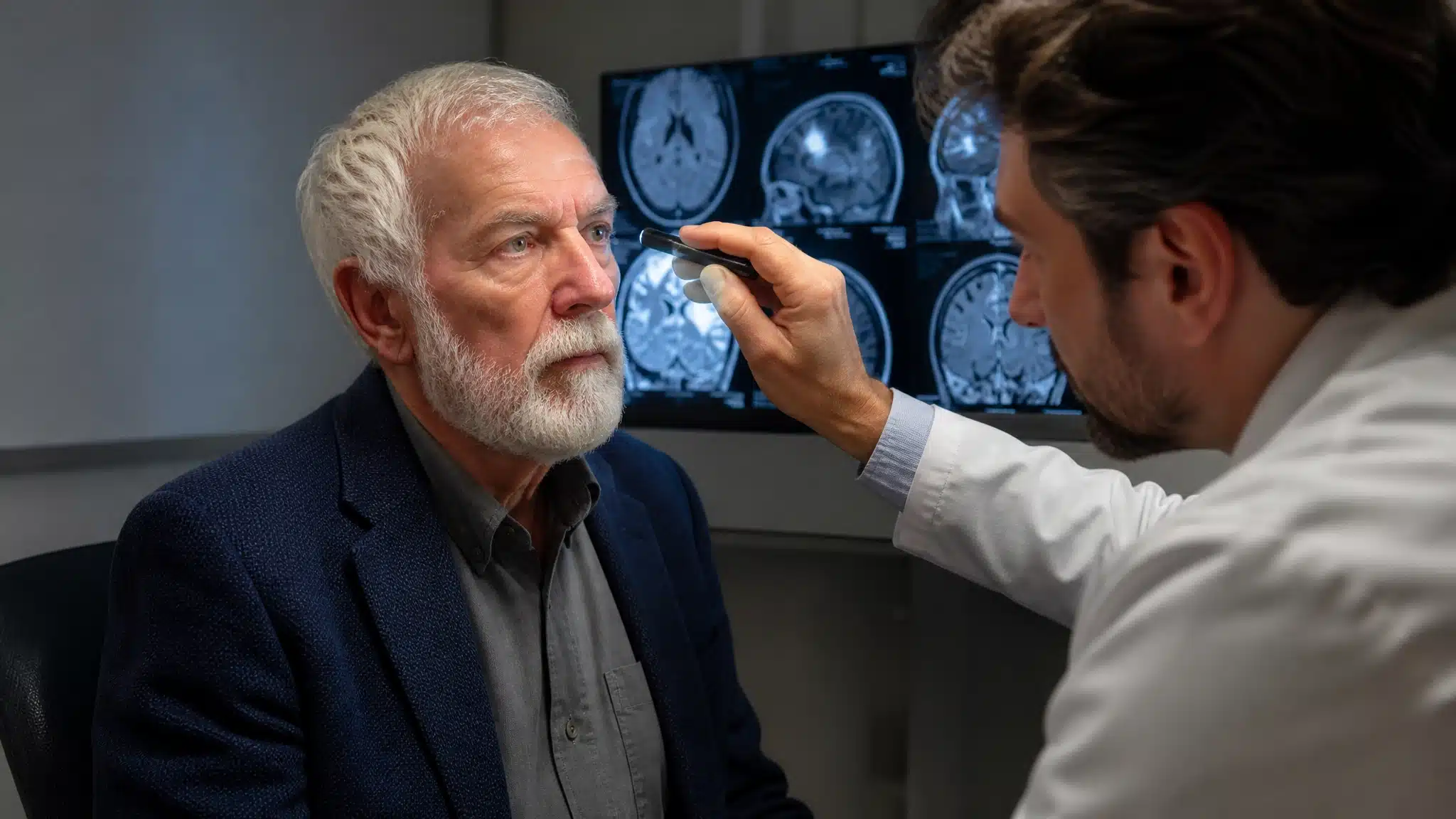
No single test confirms Wernicke encephalopathy. Blood tests and brain scans can support the diagnosis, but your doctor relies on clinical findings and may order the following:
- Blood thiamine levels: A low result supports deficiency, but a normal result doesn’t exclude the condition, and results can take time.
- Blood count and metabolic panels: These help identify alternative or contributing causes of your neurological symptoms.
- Brain MRI: The scan may show symmetric changes in the medial thalami, mammillary bodies, or periaqueductal region. With roughly 53% sensitivity, a normal MRI doesn’t rule it out.
CT can reveal other problems but often looks normal in acute cases. If your doctor suspects Wernicke encephalopathy, you’ll receive parenteral thiamine immediately rather than waiting for test results.
Why is it often missed or misdiagnosed
Wernicke encephalopathy is often missed because most patients don’t show the classic textbook presentation. Only a minority have the full triad of confusion, abnormal eye movements, and unsteady gait, so if you wait for all three, you’ll overlook many cases. Its symptoms also overlap with delirium, liver-related encephalopathy, head injury, and intoxication, which can mask the underlying deficiency. You might assume only heavy drinkers are at risk, but poor nutrition from any cause can trigger it. Testing adds confusion: blood thiamine levels can’t confirm or exclude the diagnosis, and MRI detects only about 53% of cases. A normal result shouldn’t reassure you. That’s why clinicians keep a high index of suspicion and give parenteral thiamine promptly rather than waiting for laboratory confirmation.
How is it told apart from dementia

Wernicke encephalopathy is usually told apart from dementia by its timeline and physical signs, because it is the acute stage of thiamine deficiency.
Wernicke encephalopathy stands apart from dementia through its sudden timeline and physical signs, marking the acute stage of thiamine deficiency.
You or a clinician can look for these distinguishing features:
- Onset: Confusion that appears over days, not years, points toward an acute process rather than gradual cognitive decline.
- Eye movements: You might notice flickering eyes (nystagmus) or eyes that can’t track fully, signs dementia doesn’t typically produce early.
- Gait: A wide, unsteady walk or poor coordination suggests cerebellar dysfunction tied to thiamine deficiency.
Your clinician also weighs nutrition history and alcohol use. Since the full triad appears in only a minority of cases, they won’t dismiss the diagnosis if a sign is missing. Untreated, it can progress to Korsakoff syndrome.
Why does early diagnosis matter
Early diagnosis matters because the window for effective treatment is limited, and untreated thiamine deficiency can turn the acute brain changes of Wernicke encephalopathy into lasting neurological injury.
That’s why clinicians don’t wait for test results before acting. If you or someone you’re with shows confusion, abnormal eye movements, or unsteady walking, especially alongside poor nutrition or heavy alcohol use, seek urgent medical assessment.
Guidance recommends prompt parenteral thiamine for suspected cases. Blood thiamine levels can take time, and MRI detects only about half of cases, so a normal result doesn’t rule the condition out.
Early diagnosis also matters because symptoms overlap with intoxication, delirium, liver-related encephalopathy, and head injury. If clinicians attribute your symptoms to these alone, you could miss treatment that may prevent Korsakoff syndrome.
How do clinical signs and test results compare
Clinical signs carry more diagnostic weight than test results in suspected Wernicke encephalopathy, though blood tests and brain imaging can add useful evidence. You’ll rely on the Caine criteria: two of four features support the diagnosis. Test results only add weight to your bedside assessment.
| Evidence | Diagnostic value |
|---|---|
| Caine criteria | Two or more features support diagnosis; the full triad is often absent |
| Blood thiamine | Supports deficiency but can’t confirm or exclude the condition |
| Brain MRI | About 53% sensitive, 93% specific; a normal scan doesn’t rule it out |
| CT scan | Helps identify other problems; often normal in acute cases |
If you suspect the condition, don’t let normal results reassure you. Guidance calls for prompt parenteral thiamine without waiting for laboratory or imaging confirmation, because delayed treatment risks lasting neurological injury.
How does The Villa Treatment Center confirm an accurate diagnosis
The Villa Treatment Center confirms an accurate diagnosis of wet brain through a structured clinical evaluation, since no single test confirms Wernicke encephalopathy.
Clinicians apply the Caine criteria, and two or more features support the diagnosis:
- Nutrition history: You’ll discuss food intake, weight loss, alcohol use, and other causes of thiamine deficiency.
- Neurological exam: Clinicians watch your eyes for nystagmus or ophthalmoplegia, observe your gait and coordination, and test orientation and memory.
- Supporting tests: Blood work screens for metabolic causes and thiamine deficiency, while MRI may reveal symmetric changes in the thalami or mammillary bodies.
A normal thiamine level or MRI doesn’t rule out the condition. If wet brain is suspected, you’ll need prompt parenteral thiamine without waiting for results, because delays risk permanent injury.
Get Support for Alcohol-Related Health Concerns
Recognizing wet brain symptoms early can help prevent lasting neurological damage. If confusion, abnormal eye movements, or balance problems appear, seek emergency medical care. Once medically stable, The Villa Treatment Center offers alcohol detox services and ongoing recovery support. Speak with our team about treatment options, verify your insurance, or call to discuss your next steps.
Frequently Asked Questions
Can Someone Who Doesn’t Drink Alcohol Develop Wet Brain?
Yes, someone who doesn’t drink alcohol can develop wet brain, because Wernicke encephalopathy stems from thiamine (vitamin B1) deficiency, not alcohol itself. Alcohol use disorder is one risk factor, but poor nutrition or other causes of thiamine deficiency can also trigger it. If you notice confusion, abnormal eye movements, or unsteady walking, don’t wait for tests. Seek urgent medical care, since clinicians recommend prompt parenteral thiamine to prevent lasting neurological injury.
Is Wet Brain Reversible Once Treatment Begins?
Wet brain is often partly reversible, but it depends on how quickly you get treatment. If you receive prompt parenteral thiamine, you can halt Wernicke encephalopathy’s progression and may see symptoms improve. Delays let lasting neurological injury develop, and if Korsakoff syndrome emerges, you may face a chronic memory disorder. Don’t wait for blood tests or an MRI; clinicians shouldn’t delay thiamine for confirmation. If you suspect it, you need urgent medical assessment immediately.
How Is Wet Brain Treated After a Diagnosis?
Wet brain is typically treated with prompt parenteral thiamine, meaning vitamin B1 given by injection or IV rather than by mouth. Clinicians don’t wait for blood thiamine results or MRI confirmation before starting it, because delayed treatment can allow lasting neurological injury. Your care team will also assess your nutrition and check for contributing problems, such as metabolic abnormalities. If alcohol use disorder is a factor, you’ll likely need ongoing support addressing it.
How Long Does Recovery From Wet Brain Usually Take?
Recovery from wet brain usually takes days to months, depending on the symptom and how quickly treatment starts. With prompt parenteral thiamine, eye-movement problems may improve within hours to days. Balance and confusion often improve over days to weeks, though gait problems can persist. If you develop Korsakoff syndrome, memory recovery may take months and often stays incomplete. Because delayed treatment can cause lasting injury, you shouldn’t wait for test results before starting treatment.
Can Wet Brain Be Prevented in People Who Drink Heavily?
Yes, wet brain can often be prevented, because it stems from thiamine (vitamin B1) deficiency rather than alcohol alone. If you drink heavily, you’ll lower your risk by reducing or stopping alcohol, eating regular nutritious meals daily, and asking your clinician about thiamine supplementation. Don’t ignore confusion, abnormal eye movements, or unsteady walking. Seek urgent care immediately, since clinicians give prompt parenteral thiamine and won’t wait for laboratory or imaging confirmation.