
Residential mental health treatment moves you into a 24/7 clinical environment, while living at home keeps you in the setting where your triggers began. In residential care, you’ll get round-the-clock medical support and 5, 8 hours of therapy daily, seven days a week. At home, you’re managing just 1, 20 therapy hours weekly amid everyday stressors. This structured, trigger-free space removes what disrupts healing. Below, you’ll discover how each element supports your recovery.
Key Takeaways
- Residential treatment involves living on-site 24/7, while living at home lacks overnight clinical supervision.
- Residential care provides 5, 8 therapy hours daily, versus 1, 20 therapy hours weekly at home.
- Residential settings offer round-the-clock clinical and medical support with higher staff-to-patient ratios.
- Residential treatment removes external triggers and daily stressors that can disrupt healing at home.
- Peer support and structured routines foster accountability, engagement, and normalcy throughout recovery.
How does residential mental health treatment differ from living at home
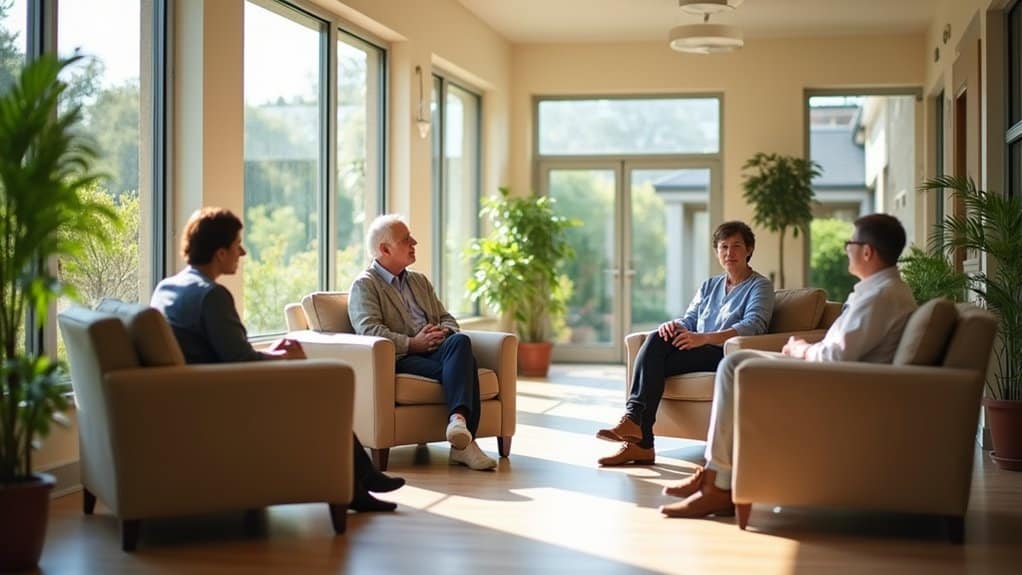
Residential mental health treatment differs from living at home in one fundamental way: where you spend your days and nights during recovery. The distinction comes down to environment and intensity. A residential facility is a place where you live on-site 24/7, receiving round-the-clock clinical support. The residential program meaning centers on removing you from external triggers that disrupt healing at home. Residential mental health treatment offers a structured setting that fosters stability and growth. Within this supportive environment, individuals can focus on their healing journey without the distractions of everyday life.
| Residential Treatment | Living at Home |
|---|---|
| Live on-site 24/7 | Stay in your residence |
| 5, 8 therapy hours daily | 1, 20 therapy hours weekly |
| Overnight clinical supervision | No overnight support |
| Free from daily stresses | Maintain daily responsibilities |
At home, you keep your routine but lack constant, on-site clinical care.
What is a residential treatment facility
A residential treatment facility is a place where you live on-site 24/7 while receiving structured clinical and medical care. Unlike seeing a therapist once a week, you’ll have round-the-clock clinical and medical support, with therapy typically ranging from five to eight hours daily, seven days per week. The residential program meaning centers on removing you from external triggers that disrupt recovery at home, letting you focus fully on healing. You won’t juggle daily stresses like laundry or grocery shopping. Residential treatment means you’ll live in a supportive, home-like environment, less clinical than a psychiatric hospital, surrounded by a team of psychiatrists, psychologists, counselors, nurses, and social workers. This setting fosters normalcy while providing the intensive, closely monitored care that severe symptoms often require.
What is the therapeutic community and how does it help

A therapeutic community is a residential treatment setting that surrounds you with peers and staff who share your goal of recovery. Living on-site 24/7, you’re part of a supportive, home-like environment that removes the external triggers that constantly disrupt progress at home. Your days follow a highly structured routine with 5 to 8 hours of therapy, seven days a week, guided by psychiatrists, psychologists, counselors, nurses, and social workers. This closely monitored setting, backed by higher staff-to-patient ratios, means you’re never facing symptoms alone. Round-the-clock clinical and medical support keeps you safe and stabilized, while shared accountability among peers reinforces your commitment. The result shows in the numbers: residential programs report a 65 percent completion rate, compared with 52 percent for outpatient services.
How does the structured environment reduce triggers
A structured environment reduces triggers by removing you from the external influences that constantly disrupt healing in a home setting. Living on-site places you away from the daily stresses like laundry and grocery shopping, so you can focus entirely on getting well.
Your days follow a highly structured schedule, with 5 to 8 hours of therapy, seven days a week. This predictable routine leaves little room for the impulses and stressors that might otherwise pull you off course. Round-the-clock clinical support means you’re never left to navigate difficult moments alone. Next steps after therapy often involve establishing a support system to continue the progress made during treatment. A strong network can help you stay accountable and provide encouragement during challenging times.
How does peer support aid recovery


Peer support aids recovery by surrounding you with people who understand what you’re facing because they’re facing it too. When you live on-site 24/7, this shared experience reduces the stigma that often isolates you at home, where family-related barriers can complicate honest conversations.
In a residential setting, you’re immersed in a supportive, home-like environment designed to foster normalcy rather than clinical detachment. That daily contact with peers reinforces the routines and lessons from your 5 to 8 hours of therapy, giving you consistent encouragement between sessions.
You’ll also find accountability. When someone beside you stays committed, you’re more likely to stay engaged too, one reason completion rates reach 65 percent in residential care versus 52 percent in outpatient settings.
Who benefits most from this setting
You benefit most from residential treatment if your current living environment is unsafe, unstable, or unsupportive of recovery. When your home constantly disrupts your progress with triggers you can’t escape, round-the-clock structured care gives you the stability you need to heal.
You’ll benefit most if you’re managing severe addiction, medically dangerous withdrawal, or co-occurring mental health conditions that require integrated psychiatric care. These situations demand 24-hour clinical and medical support that home-based care simply can’t provide. Treating co-occurring disorders requires a comprehensive approach that addresses addiction and mental health simultaneously. Professionals collaborate on personalized treatment plans that improve recovery outcomes, leading to greater stability and quality of life.
If your symptoms are severe enough that you need constant support to stay safe, residential care offers the crisis intervention and overnight supervision you can’t get at home. If stabilization is your priority, this setting removes the daily stresses standing between you and recovery.
Find Stability in a Supportive Residential Setting
When symptoms or triggers at home make it difficult to heal, The Villa Treatment Center provides structured, 24/7 residential treatment in a supportive environment. Verify your insurance or call (818) 639-7160 to learn whether residential care is right for you.
Frequently Asked Questions
How Do I Know If Residential Treatment Is Better Than Staying at Home?
Residential treatment may be a better fit if your home environment feels unsafe, unstable, or filled with triggers that make recovery difficult. It can also help when symptoms require 24-hour supervision, intensive daily therapy, medication support, or crisis stabilization. A mental health professional can assess your symptoms, support system, and safety needs to determine whether residential care or a less intensive outpatient program is appropriate.
How Long Does a Typical Residential Treatment Stay Last?
You’ll typically stay in residential treatment for 30 to 90 days, though your exact length depends on your needs and progress. During this time, you’re fully immersed in structured, round-the-clock care that separates you from outside stressors until your programming’s complete. It’s worth knowing that this commitment pays off, residential programs report a 65 percent completion rate, compared with 52 percent for outpatient services, supporting your path toward lasting recovery.
What Is the Main Difference Between Bipolar Disorder and BPD?
The main difference is the pattern of mood changes. Bipolar disorder causes distinct manic, hypomanic, or depressive episodes that typically last for days or weeks, with periods of greater stability in between. BPD causes faster emotional shifts that may occur within hours and are often triggered by rejection, conflict, or fear of abandonment. A professional evaluation is essential because the conditions can overlap but require different treatment approaches.
What Professionals Make up a Residential Treatment Care Team?
In residential treatment, you’ll work with a comprehensive team of psychiatrists, psychologists, counselors, nurses, and social workers. This multidisciplinary group provides integrated care, which is especially important if you’re managing co-occurring disorders. You’ll also have access to in-house detox and medical monitoring, so you won’t need referrals for these services. This coordinated approach ensures you’re supported clinically and emotionally throughout your stay, addressing both your mental health and medical needs together.
What Are the Completion Rates for Residential Versus Outpatient Care?
You’ll find that residential programs report a 65 percent completion rate, while outpatient services come in at 52 percent. That difference reflects the structured, round-the-clock environment residential care provides, which helps you stay focused on healing without daily distractions. If you’re weighing your options, know that higher completion rates don’t guarantee the right fit, your safety, support needs, and living situation all matter when choosing what works best for you.