
An effective addiction treatment program produces measurable outcomes by matching evidence-based care to your clinical needs, not a one-size-fits-all model. It starts with a comprehensive assessment of your substance use, mental health, and social barriers. You’ll get proven interventions like pharmacotherapy, behavioral therapy, and relapse prevention, coordinated by a multidisciplinary team. Longer treatment, 90 days or more, improves your success. Below, you’ll discover exactly how each of these components strengthens your recovery.
Key Takeaways
- Effective programs rely on evidence-based practices and produce measurable, trackable outcomes that guide ongoing treatment adjustments.
- Comprehensive assessment of substance use, mental health, and social needs allows care to match individual clinical requirements.
- A multidisciplinary team coordinates medical, psychiatric, and behavioral services to prevent gaps and address co-occurring conditions.
- Longer treatment duration of 90 or more days significantly improves retention, completion, and long-term recovery success.
- Post-discharge planning with peer support and active follow-up sustains recovery and reduces relapse and disengagement.
What Makes an Addiction Treatment Program Effective

An addiction treatment program works when it produces measurable outcomes and relies on evidence-based practices. Effective addiction treatment starts with a comprehensive assessment of substance use severity, co-occurring mental health conditions, medical needs, and social barriers, then matches care to your clinical need rather than applying a one-size-fits-all model. The best rehab programs rely on proven interventions, including pharmacotherapy, behavioral therapy, relapse prevention, and coping-skill development, instead of unsupported methods. A good rehab tracks retention closely, since completion remains limited, with only about 48% of patients finishing treatment. Longer duration matters too; programs of 90 days or more generally show improved success. Integrated care, family involvement, peer support, and ongoing quality monitoring further strengthen your chances of lasting recovery. Factors behind treatment success often include the level of support patients receive both during and after treatment. Additionally, a strong therapeutic alliance between patients and their providers can significantly influence outcomes. Engaging family members in the recovery process tends to enhance motivation and accountability, further promoting sustained success.
How Does Individualized Assessment Improve Treatment Fit
Individualized assessment improves treatment fit by revealing the specific factors driving your substance use before any clinical decisions get made. A full evaluation matches care to clinical need instead of forcing a one-size-fits-all model that weakens engagement. A comprehensive assessment examines:
- Substance use severity and patterns that determine intensity and duration of care.
- Co-occurring mental health conditions requiring integrated, coordinated treatment.
- Medical needs and social barriers that predict early attrition.
Because attrition can reach 80% in specialty settings, early screening and triage help you stay engaged from the start. Programs that identify specialized populations and tailor care by gender, culture, and severity make you more likely to complete treatment and sustain measurable recovery outcomes.
How Does a Multidisciplinary Treatment Team Coordinate Medical Clinical and Recovery Needs

A multidisciplinary treatment team coordinates your medical, clinical, and recovery needs by connecting medical, psychiatric, and behavioral services so nothing falls through the cracks. This integrated approach is a recognized quality marker, especially when you’re managing a substance use disorder alongside a co-occurring mental health condition. Instead of navigating fragmented services, you get coordinated medical, psychiatric, and behavioral care that supports continuity.
Your team combines pharmacotherapy, counseling, and ongoing follow-up, which improves outcomes for opioid use disorder when medication pairs with structured support. Because medication retention remains a challenge, only 36% of episodes last beyond six months in one study, coordination keeps you engaged.
The team also tracks your progress, adjusting relapse prevention, stress management, and social skills training as your needs shift. That collaboration reduces gaps and strengthens your recovery.
How Should Co-Occurring Mental Health Conditions Be Addressed Within Addiction Care
Co-occurring mental health conditions should be addressed with integrated treatment that tackles both your substance use and psychiatric needs at the same time, not one after the other. When care stays fragmented, you’re more likely to disengage and relapse. Integrated treatment is a recognized quality marker because it reduces the gaps that undermine your recovery.
Effective programs coordinate services so you receive:
- Behavioral therapy that targets both your addiction and psychiatric symptoms together.
- Pharmacotherapy managed alongside your medical and behavioral care.
- Coordinated medical, psychiatric, and behavioral services that support continuity.
This combined approach keeps you engaged and supports better outcomes. By treating both conditions concurrently, your program builds coping skills, strengthens self-efficacy, and reduces the fragmentation that so often derails long-term progress.
How Do State Licensing Accreditation and Clinician Credentials Differ as Quality Signals
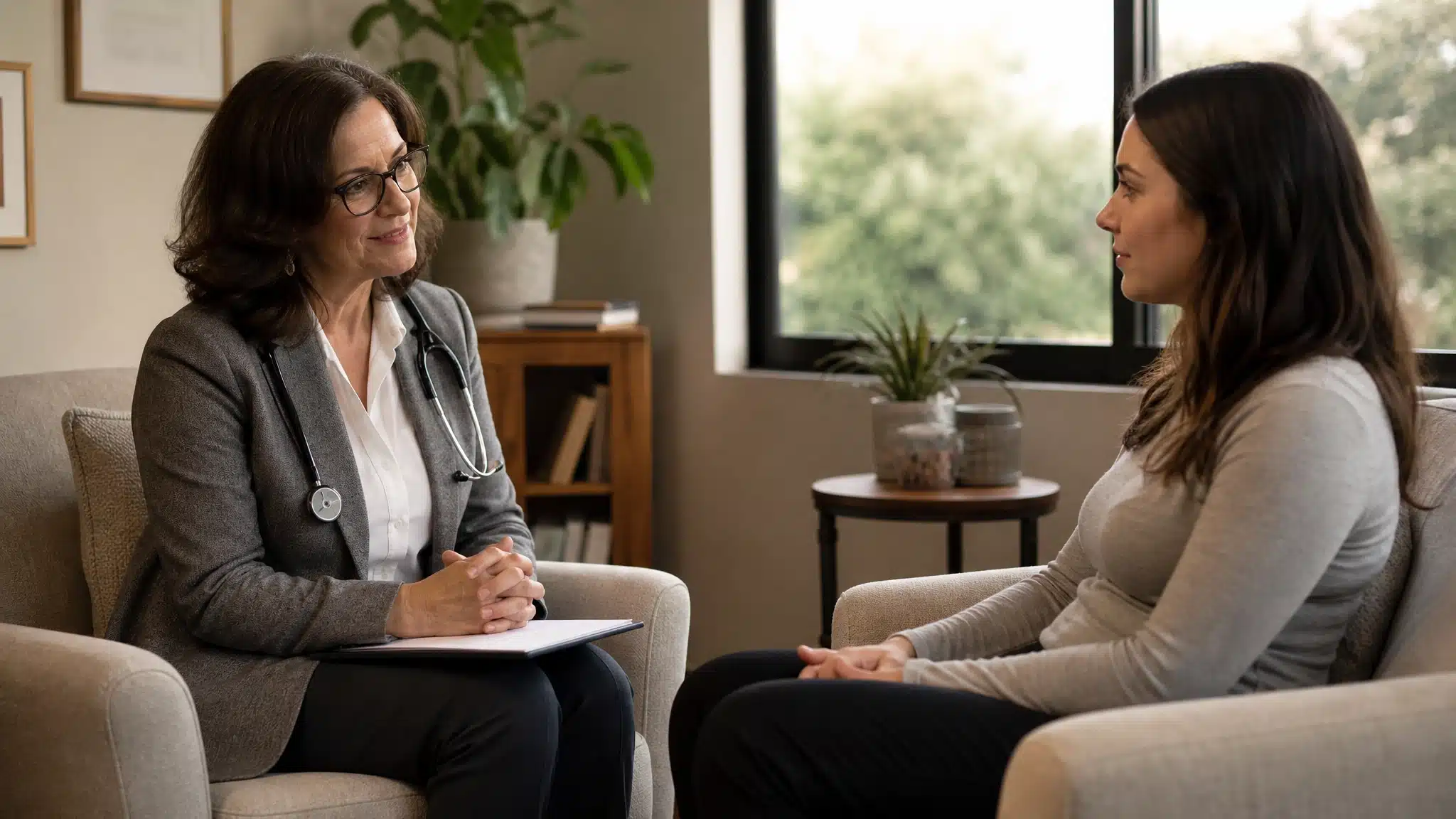
State licensing, accreditation, and clinician credentials differ because each verifies a distinct dimension of quality. State licensing confirms a program meets minimum legal operating standards, while accreditation signals voluntary adherence to higher benchmarks. Clinician credentials verify individual staff competence and training, directly linked to evidence-based delivery.
| Quality Signal | What It Verifies | Your Takeaway |
|---|---|---|
| State Licensing | Minimum legal standards | Baseline safety only |
| Accreditation | Voluntary quality benchmarks | Stronger program review |
| Clinician Credentials | Individual staff competence | Skilled care delivery |
Accreditation, trained staff, and supervision are linked to higher-quality treatment. When you’re comparing programs, don’t stop at licensing. Check whether accreditation and credentialed clinicians confirm the structured, supervised care that supports retention and lasting recovery.
How Should a Program Respond When a Client Is Not Improving
A program should respond to a client who isn’t improving by tracking performance during treatment rather than waiting for discharge to recognize the problem. You need to monitor indicators like attendance, retention, adherence, relapse episodes, and functioning so you can catch stalled progress early. When the data signal trouble, reassess and adjust care rather than continuing an ineffective plan.
Effective programs respond by:
- Re-evaluating the assessment to check for missed co-occurring conditions, medical needs, or social barriers.
- Matching the client to a more appropriate intervention intensity, medication, or specialized track.
- Strengthening engagement through active follow-up, flexible scheduling, and family or peer support.
You should treat lack of improvement as a prompt for change, documenting adjustments and measuring whether they move outcomes forward.
How Can Family Involvement Support Treatment Without Replacing Individual Care
Family involvement supports treatment without replacing individual care by strengthening adherence, reinforcing abstinence, and building recovery-oriented networks that sustain progress between sessions, all while structured clinical care remains the foundation. When you engage families, supportive relationships create pro-recovery environments, establish stronger norms, and reduce exposure to relapse triggers.
But you can’t let family support stand in for evidence-based clinical interventions. Pharmacotherapy, behavioral therapy, relapse prevention, and individual psychotherapy remain essential, and families supplement rather than deliver these components. Pair recovery supports with structured treatment to maximize their impact.
You’ll see better outcomes when you coordinate family participation alongside individual care, using each to reinforce the other while maintaining clinical rigor throughout.
How Should an Effective Program Plan for Continued Recovery After Discharge
An effective program plans for continued recovery after discharge by building a structured continuing care plan that anticipates early attrition and sustains engagement. Because retention falls sharply, 57% at 12 months and 38.4% at three years in opioid substitution studies, your program can’t treat discharge as an endpoint.
Discharge isn’t the finish line, it’s where recovery gets tested. Plan for what comes after.
Prioritize these components:
- Active follow-up with flexible scheduling and barrier reduction to catch disengagement before dropout occurs.
- Recovery support networks, including peer support that’s shown 83% retention at 3 months and 76% at 6 months when paired with clinical care.
- Ongoing monitoring of relapse episodes, adherence, and functioning to trigger timely service adjustments.
When you coordinate these elements, you protect long-term recovery.
Get Personalized Addiction Treatment
Effective recovery starts with care that fits your individual needs, health, and treatment goals. The Villa Treatment Center provides addiction treatment with personalized, evidence-based care and ongoing support. Check your coverage through our verify insurance page or call our team to discuss your treatment options and take the next step toward recovery.
Frequently Asked Questions
What Should You Look For When Comparing Addiction Treatment Programs?
When comparing addiction treatment programs, look for evidence-based therapies, appropriate medication when needed, personalized treatment plans, and care for co-occurring mental health conditions. Accreditation, qualified clinicians, ongoing progress monitoring, and continuing support after discharge can also indicate a comprehensive approach. Choosing a program that matches your clinical needs and supports long-term engagement can strengthen your recovery outcomes.
How Can I Find Out If My Insurance Covers Addiction Treatment?
Insurance coverage for substance use disorder treatment depends on your specific plan and benefits. The best way to understand your coverage is to verify your benefits with your insurance provider and the treatment program you’re considering. Ask about covered services, treatment levels, medications, and any out-of-pocket costs before starting care.
How Long Is a Typical Addiction Treatment Program?
You’ll typically find programs lasting 90 days or more, since longer treatment durations are linked to better outcomes. Shorter stays exist, but research consistently shows you’re more likely to succeed when you stay engaged for at least three months. Keep in mind that retention drops sharply over time, so your active participation matters. You’ll get the best results when structured care, follow-up, and barrier reduction keep you in treatment longer.
What Factors Affect Insurance Coverage For Addiction Treatment?
Insurance coverage for addiction treatment can depend on your specific plan, the level of care, and the services included in your treatment. Coverage may differ for detox, residential, outpatient care, medications, and ongoing support. Verify your benefits with your insurer and treatment provider to understand covered services, eligibility requirements, and potential out-of-pocket costs.
What Is the Difference Between Inpatient and Outpatient Treatment?
Inpatient treatment means you’ll live at a facility, receiving round-the-clock structured care, medical supervision, and support, ideal if you’ve got severe addiction or co-occurring conditions. Outpatient treatment lets you stay home while attending scheduled sessions, so you’ll maintain work and family responsibilities. Your choice should match your clinical needs: severity, medical risks, and social barriers. Remember, longer engagement improves outcomes, and integrated care addressing both substance use and mental health strengthens your recovery.