
Nitrous oxide’s addictive properties stem from its direct impact on your brain’s dopaminergic system, where it triggers rapid synaptic plasticity changes in the medial prefrontal cortex while simultaneously inhibiting SK2 channels in layer 5 prefrontal neurons. This causes intense pleasure sensations and increased burst firing activity with repeated exposure. The substance’s effects on glutamate neurotransmission and nNOS-dependent processes create a powerful cycle of psychological dependence. Understanding these neural mechanisms reveals why breaking nitrous oxide addiction requires thorough medical intervention.
The Brain’s Response to Nitrous Oxide

Three key neuronal mechanisms underlie the brain’s response to nitrous oxide. First, the drug inhibits SK2 channels in layer 5 prefrontal neurons, reversing stress-induced underactivity. This inhibition leads to rapid synaptic plasticity changes, particularly in the medial prefrontal cortex. Studies have shown that repeated N2O exposure significantly increases burst firing activity in these regions.
Second, you’ll find that nitrous oxide triggers nNOS-dependent processes, which are essential for its antidepressant effects. When you examine the brain’s response, you’ll notice glutamate neurotransmission alterations, though these occur through mechanisms distinct from traditional NMDA receptor blockade. Research led by Dr. Peter Nagele at the University of Chicago Medicine has demonstrated these unique mechanisms. The gas produces a quick-acting euphoric rush that contributes to its addictive potential.
Third, the drug increases BDNF expression in the mPFC while activating specific L5 pyramidal neurons in the cingulate cortex. This selective activation pattern, confirmed through calcium imaging, suggests a targeted impact on mood-regulating neural circuits.
Psychological Impact and Dependence Patterns
While the initial effects of nitrous oxide may seem recreational, the psychological impact manifests through distinct warning signs and dependence patterns that signal addiction risk. You’ll notice increasing emotional volatility as anxiety, depression, and uncontrolled laughter fluctuate unpredictably. These psychological changes often lead to risk-taking behaviors and deteriorating social relationships. Combining nitrous oxide with alcohol or depressants can create dangerous health complications. The growing need for comprehensive treatment approaches reflects the complexity of nitrous oxide addiction recovery. Recent studies show that psychosocial factors, including unemployment and social isolation, significantly contribute to abuse patterns.
Beneath nitrous oxide’s recreational facade lies a dangerous psychological spiral marked by volatile emotions, risky choices, and fractured relationships.
- Heavy users report spending 46-98% of their time obtaining or using N₂O
- Vitamin B12 depletion intensifies neurological and psychological symptoms
- Compulsive behavior patterns emerge, marked by intense cravings
- Social withdrawal and neglect of daily responsibilities become common
- Development of tolerance requires escalating doses for desired effects
The progression from casual use to dependence typically involves masked psychological distress, where uncontrollable laughter may conceal underlying anxiety or depression requiring professional intervention.
Physical Health Risks and Warning Signs
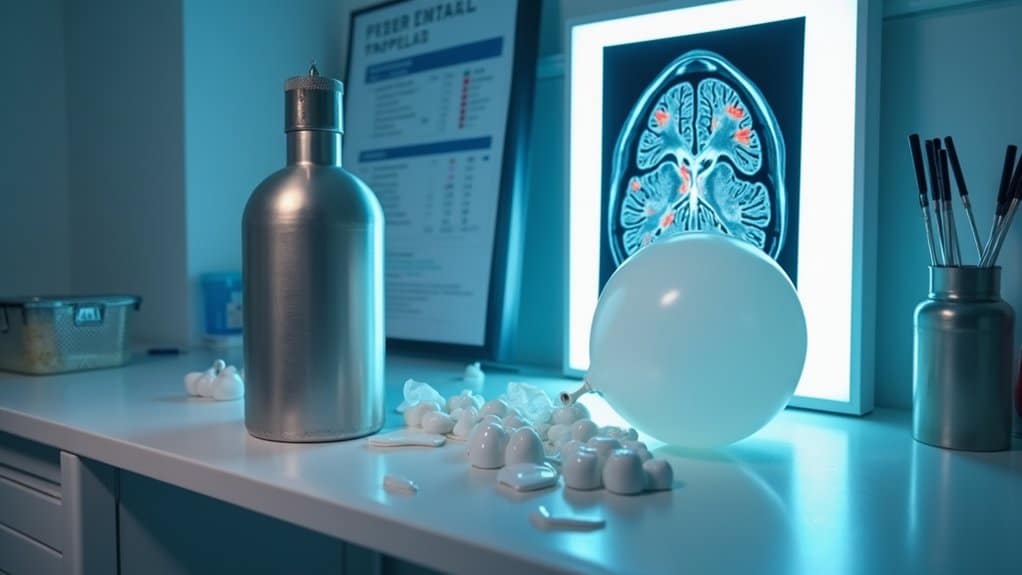
When using nitrous oxide, you’ll likely encounter observable warning signs like empty cartridges and balloons in your environment, alongside physical symptoms including dizziness, shortness of breath, and persistent headaches. Medical professionals have reported that patients develop psychological dependence after frequent recreational use.
Your body will exhibit clear indicators of B12 deficiency through numbness in extremities and frequent falls, while cognitive function may deteriorate through disoriented speech patterns. Users face serious dangers as inhaling can be fatal from hypoxia. The rapid onset of intoxication leads to quick peak effects, often causing users to seek higher concentrations for repeated use.
The long-term effects manifest as severe system damage, particularly to your nervous system, resulting in spinal cord damage, peripheral neuropathy, and significant cognitive decline that can persist even after cessation of use.
Physical Warning Signs
The chronic use of nitrous oxide produces distinct physical warning signs that indicate potentially severe health complications. You’ll notice progressive deterioration of physical functions due to B12 depletion and oxygen deprivation, leading to muscle weakness and severe nutritional deficiencies that affect multiple body systems.
Your extremities may develop numbness or tingling sensations, indicating peripheral nerve damage. You might experience frequent dizzy spells, coordination problems, or unexplained fatigue. Watch for blue-tinted lips or fingernails, signaling dangerous oxygen deprivation. Monitor for persistent headaches, blurred vision, or irregular heartbeats. Users may experience stiff muscles and bladder problems from prolonged exposure. Heavy users often develop mood disorders and depression that persist even after stopping use. Note any recurring digestive issues, mouth ulcers, or unexplained shortness of breath.
These symptoms require immediate medical attention, as they suggest serious systemic damage from nitrous oxide exposure. Early intervention can prevent permanent neurological and cardiovascular complications.
Long-Term Health Effects
Prolonged nitrous oxide abuse inflicts devastating damage across multiple body systems, triggering a cascade of severe neurological, hematological, and systemic complications.
You’ll experience progressive deterioration of your nervous system, with damage so extensive that nerve regeneration becomes severely compromised. The depletion of vitamin B12 leads to megaloblastic anemia and potentially irreversible neurological deficits, affecting your mobility and cognitive function.
Your organs face critical oxygen deprivation, potentially necessitating organ transplantation in severe cases. The systemic impact extends to your reproductive system, immune function, and respiratory health. You’ll likely develop chronic conditions including sensorimotor polyneuropathy, persistent psychosis, and organ dysfunction.
The combined effects of hypoxia and B12 deficiency create a dangerous cycle of deterioration that can ultimately prove fatal.
Social and Environmental Risk Factors
Due to widespread availability and minimal regulatory oversight, nitrous oxide presents significant social and environmental risk factors for addiction development. The combination of affordable access and lax regulations creates a perfect storm for substance misuse patterns to emerge.
Healthcare systems struggle to identify and track abuse due to limited screening capabilities and clinical awareness. Survey data indicates that 91.6% of clinicians were unaware of nitrous oxide’s adverse health effects. The substance’s NMDA receptor antagonism produces euphoric effects that reinforce addictive behaviors.
Unrestricted online purchasing enables anonymous acquisition without age verification. Recreational settings normalize use through peer influence and social acceptance. Legal status creates false perception of safety despite serious health risks. Regional inconsistencies in enforcement allow exploitation of regulatory gaps. High purity in commercial products increases addiction potential through dopaminergic pathway activation.
These factors, coupled with inadequate public health education and minimal legislative controls, contribute to a complex web of risk factors that facilitate addiction development and complicate intervention efforts.
Treatment Approaches and Recovery Methods

Effective treatment of nitrous oxide addiction requires an extensive, multi-modal approach combining medical intervention, behavioral therapy, and long-term support strategies. You’ll find that initial treatment typically begins with medically supervised detoxification, followed by medication management to address withdrawal symptoms and vitamin B12 deficiencies.
Cognitive-behavioral therapy and motivational interviewing form the cornerstone of psychological intervention, helping you identify triggers and develop relapse prevention strategies. These approaches are often supplemented with group therapy and social skills training to rebuild interpersonal capabilities. Weekly B12 injections are administered throughout the first month of treatment to restore proper metabolic function.
Long-term recovery success depends on continuous monitoring of biological markers, particularly B12 levels, while maintaining engagement with support networks. Though specialized programs remain limited, integrated treatment plans addressing both addiction and potential co-occurring mental health disorders offer the most promising outcomes for sustained recovery.
Current Usage Trends and Statistics
Recent data reveals alarming upward trends in nitrous oxide misuse across multiple demographics. National prevalence statistics indicate 13 million lifetime misusers, with a concerning 110% increase in related deaths from 2019-2023. The widespread online availability of nitrous oxide through smoke shops and e-commerce platforms continues to fuel the rising misuse rates. A major contributing factor has been the surge in social media videos showing recreational use of the substance.
Demographic usage patterns show individuals aged 20-39 are particularly vulnerable, especially when combining nitrous oxide with other substances.
- EMS responses in Michigan show a 7.3% fatality rate, including suspected suicides
- Emergency department visits quadrupled from 7 to 60 cases between 2019-2023
- Poison center calls increased nearly fivefold, jumping from 10 to 48 cases
- 30% of cases involve polysubstance use with benzodiazepines, cannabis, or alcohol
- Metropolitan areas demonstrate higher prevalence due to increased accessibility
The exponential growth in mortality rates, despite FDA warnings, suggests an emerging public health crisis requiring immediate intervention.
Prevention Strategies and Public Health Concerns
Implementing robust prevention strategies remains critical as public health officials confront the rising epidemic of nitrous oxide addiction. You’ll find that effective interventions must address family dysfunction and strengthen community outreach programs to combat this growing crisis. Research demonstrates that extensive approaches yield better outcomes when they integrate both clinical and social support systems.
| Prevention Focus | Implementation Strategy | Impact Metrics |
|---|---|---|
| Family Support | Therapy Integration | Reduced Relapse Rates |
| Community Education | Targeted Outreach | Increased Awareness |
| Clinical Care | Multidisciplinary Treatment | Enhanced Recovery |
You’ll need to deliberate how family-focused interventions can address underlying psychological factors while community-based initiatives provide essential support networks. Evidence shows that combining these approaches with medical treatment protocols drastically improves long-term recovery success rates and reduces the risk of relapse among affected individuals.
Frequently Asked Questions
Can Nitrous Oxide Addiction Occur After Just One Recreational Use?
While single use experimentation with nitrous oxide can trigger immediate cravings in vulnerable individuals, true addiction rarely develops from one exposure. You’ll typically experience short term side effects like euphoria and altered consciousness, but addiction patterns emerge through repeated use.
Your brain’s reward pathways can be activated after initial use, but clinical evidence suggests that compulsive behavior develops primarily through sustained exposure over time.
Does Past Alcohol or Drug Addiction Increase Vulnerability to Nitrous Oxide Dependence?
If you have a history of substance use disorders, you’re likely more vulnerable to developing nitrous oxide dependence. Your brain’s reward pathways, already sensitized from past addictions, can more readily form psychological dependence on nitrous oxide’s euphoric effects.
Additionally, you may be more susceptible to nutritional deficiencies if you’ve experienced alcohol-related B12 deficits before. Your existing patterns of addictive behavior can transfer to this substance more easily.
How Long Does Nitrous Oxide Remain Detectable in Blood or Urine Tests?
You’ll find that plasma nitrous oxide levels remain detectable in blood for only a brief period, typically 5-15 minutes after use, extending to around 60 minutes in recreational users.
There’s no reliable detection through urinary nitrous oxide metabolites, as the gas is primarily expelled through breathing rather than being metabolized. Standard urine tests won’t detect it, and blood testing requires specialized equipment, making detection particularly challenging in clinical settings.
What Percentage of Nitrous Oxide Users Develop Permanent Neurological Damage?
Based on current research data, you can’t determine an exact percentage of users who develop permanent neurological damage, as large-scale epidemiological studies are lacking.
However, you’ll face increased risk of myeloneuropathy with chronic use, particularly affecting myelination processes. Research shows effects on myelination become more likely after 4-5 months of regular use, with approximately 1.9% risk of neurological symptoms per single-canister session, though individual susceptibility varies considerably.
Are There Genetic Factors That Make Some People More Susceptible to Addiction?
Your genetic predisposition can profoundly influence your susceptibility to addiction, particularly through variations in the NOS gene and receptor-level differences that affect reward pathways.
You’re more vulnerable if you carry specific genetic polymorphisms that impact neurotransmitter systems. However, it’s essential to understand that environmental influences interact with these genetic factors, creating a complex interplay that determines your overall risk for developing addictive behaviors.