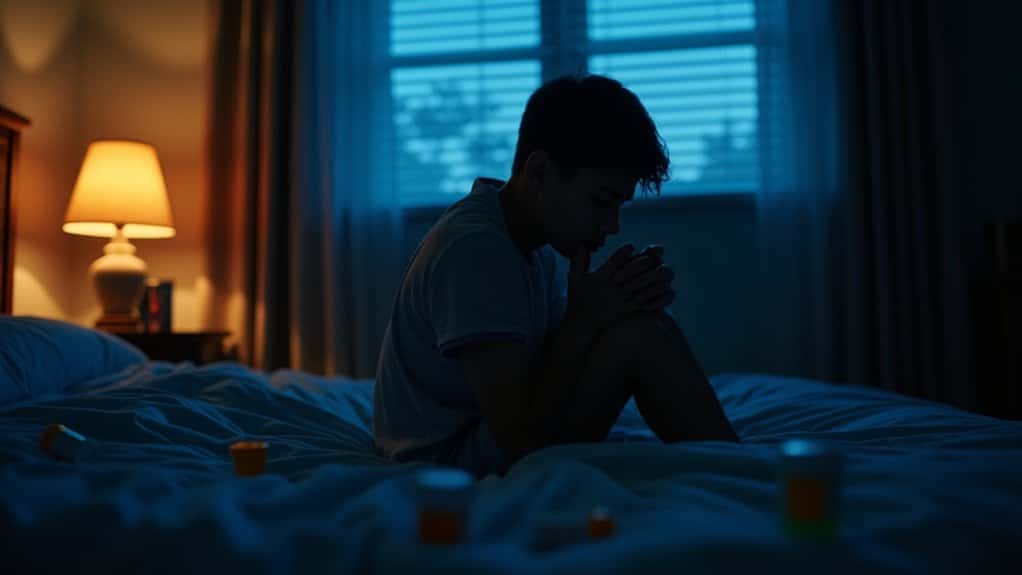
Drug-induced bipolar symptoms and primary bipolar disorder look nearly identical, but they differ in one measurable way: timing relative to substance use. Drug-induced symptoms emerge during intoxication, withdrawal, or medication exposure, and typically resolve within about a month of stopping the substance. Primary bipolar disorder persists beyond expected drug effects and recurs independently, without re-exposure. Your family history and prior mood episodes matter too. Understanding these distinctions helps you recognize what your symptoms truly signal.
Key Takeaways
- Drug-induced symptoms develop during intoxication, withdrawal, or medication exposure and are directly linked to a specific substance.
- Primary bipolar disorder persists beyond expected drug effects and recurs independently of any substance use.
- Drug-induced conditions often resolve within about one month of stopping the substance, unlike primary bipolar disorder.
- The temporal relationship between substance exposure and mood changes is crucial for distinguishing the two conditions.
- Family history of bipolar and prior mood episodes without substance use point toward a primary disorder.
How Are Drug-Induced Bipolar Symptoms Different From Bipolar Disorder

Drug-induced bipolar symptoms differ from bipolar disorder in their timing and course. Drug induced bipolar symptoms develop during intoxication, withdrawal, or medication exposure, and they’re directly linked to a specific substance. Bipolar disorder, by contrast, is a primary mood disorder whose episodes recur independently of any substance and persist beyond expected drug effects.
Can substance abuse cause bipolar disorder? Not exactly. Substances can mimic or trigger manic and depressive states, but true bipolar disorder isn’t caused by them. If your symptoms resolve within about a month of stopping the substance, that points to a drug-induced condition.
What drugs cause bipolar disorder symptoms? Stimulants, antidepressants, corticosteroids, and anabolic steroids commonly provoke manic-like presentations in susceptible individuals.
What Does Substance or Medication-Induced Bipolar and Related Disorder Mean
Substance/medication-induced bipolar and related disorder is a formal diagnostic category describing mood disturbances that develop during or shortly after intoxication, withdrawal, or exposure to a medication capable of producing those symptoms. It means your manic, hypomanic, or depressive symptoms are directly linked to a substance rather than a primary mood disorder. You’ll typically notice symptoms beginning within days of ingestion or during withdrawal, and they often resolve within about one month of stopping the substance. Common triggers include stimulants, antidepressants, corticosteroids, and anabolic steroids. To meet this diagnosis, clinicians must establish a temporal relationship between substance exposure and your mood change, confirming the substance can produce those effects. If your symptoms persist beyond expected substance effects, that points toward primary bipolar disorder instead.
How Does the Timing of Mood Symptoms Relative to Substance Exposure Inform Diagnosis

The timing of mood symptoms relative to substance exposure is one of the strongest diagnostic clues clinicians have. If your symptoms begin within days of ingestion or during withdrawal, they point toward a substance or medication-induced condition. Stimulant intoxication can produce manic-like elevation, decreased need for sleep, and racing thoughts, while withdrawal often mirrors depression with low energy and hopelessness.
What happens after you stop matters just as much. When your symptoms resolve after cessation, often within about a month, that supports a substance-induced diagnosis. If your episodes persist beyond expected substance effects or recur without re-exposure, that suggests a primary bipolar disorder instead. By tracking this temporal relationship, clinicians can distinguish a transient drug effect from an independent mood disorder.
How Do Intoxication Withdrawal Medication Effects and Primary Bipolar Episodes Differ
Intoxication, withdrawal, medication effects, and primary bipolar episodes differ in their underlying mechanisms and how symptoms resolve. Intoxication states, especially from stimulants, produce elevated mood, decreased sleep, racing thoughts, and impulsivity that mimic mania. Withdrawal states typically resemble depression, with low energy, hopelessness, and reduced interest. Medication effects from corticosteroids, antidepressants, or levodopa can trigger manic symptoms in susceptible patients during exposure. Primary bipolar episodes recur independently, persisting beyond expected substance effects.
| State | Typical Presentation |
|---|---|
| Stimulant intoxication | Manic-like elevation, impulsivity |
| Withdrawal | Depressive features, fatigue |
| Primary bipolar | Recurrent episodes, no substance link |
You’ll distinguish these by tracking whether symptoms resolve after abstinence, usually within a month, or continue independently, the latter pointing toward primary bipolar disorder.
How Do Prior Mood Episodes Without Substance Use and Family History Inform the Evaluation

Prior mood episodes without substance use and family history inform the evaluation by revealing whether a mood disorder exists independent of any substance. If you’ve had manic, hypomanic, or depressive episodes during periods of confirmed abstinence, that points toward primary bipolar disorder rather than a substance-induced condition. Episodes occurring without intoxication or withdrawal can’t be explained by a drug effect, so they carry significant diagnostic weight.
Family history strengthens the picture. Bipolar disorder is highly heritable, so a first-degree relative with the diagnosis raises your baseline risk and makes a primary disorder more likely. When you combine documented substance-free episodes with a positive family history, you shift the evaluation toward bipolar disorder, even if a substance recently triggered the current presentation, guiding longer-term management decisions.
What Medical or Psychiatric Conditions Can Mimic Bipolar Symptoms During Substance Use
Endocrine disorders, neurological conditions, primary psychiatric disorders, and metabolic disturbances can mimic bipolar symptoms during substance use. Several medical and psychiatric conditions can produce manic or depressive symptoms that overlap with substance use, complicating your evaluation. When someone presents with mood changes during intoxication or withdrawal, you can’t assume the substance is the sole cause. Various organic and psychiatric processes mimic manic or depressive states, and stimulant effects can mask an underlying condition. Consider these differentials:
- Endocrine disorders, such as hyperthyroidism, which can drive elevated mood, insomnia, and agitation resembling mania.
- Neurological conditions, including seizure disorders or brain lesions that alter mood and behavior.
- Primary psychiatric disorders, like schizoaffective disorder or major depression, presenting alongside substance use.
- Metabolic disturbances, such as electrolyte imbalances producing confusion or affective changes.
Careful history, examination, and targeted testing help you distinguish these overlapping presentations.
Why May Clinicians Need Observation Over Time During Sobriety Before the Diagnosis Is Clear
Clinicians need observation over time during sobriety because substance-induced mood symptoms often fade within about a month of cessation, so you can’t confirm a primary bipolar diagnosis while a substance still drives the picture. You need to watch what happens once the drug clears. If manic or depressive episodes resolve after abstinence and don’t recur without re-exposure, you’re likely dealing with a substance-induced condition. If episodes persist beyond expected substance effects or return independently of use, that points toward primary bipolar disorder. Observation over time lets you separate lingering intoxication or withdrawal effects from an independent mood disorder, so you avoid mislabeling and commit patients to appropriate long-term treatment.
What Information Should Someone Bring to a Psychiatric Evaluation About Substance Use and Mood Episodes
Bring specifics about your substance use and mood episodes rather than vague recollections, because every detail sharpens the diagnostic picture. Your clinician needs to establish whether your symptoms developed during intoxication, withdrawal, or medication exposure, or whether they’ve persisted independently. Accurate timelines let them distinguish a substance-induced condition from primary bipolar disorder.
Bring the following:
- Substance history: which substances or medications you’ve used, doses, frequency, and your most recent use, including prescriptions like corticosteroids or antidepressants.
- Mood timeline: when manic or depressive symptoms started relative to substance use, withdrawal, or abstinence.
- Abstinence periods: whether episodes continued after you stopped, and for how long.
- Medical records: prior diagnoses, toxicology results, hospitalizations, and current medication lists.
Get Support for Bipolar Symptoms Today
Understanding whether mood symptoms are substance-induced or related to bipolar disorder can help you find the right care. The Villa Treatment Center provides comprehensive bipolar disorder treatment with clinical support for lasting stability. Check your coverage through our verify insurance page or call our team to discuss your options today.
Frequently Asked Questions
Can Drug-Induced Bipolar Symptoms Permanently Develop Into Lifelong Bipolar Disorder?
You can’t assume drug-induced symptoms automatically become lifelong bipolar disorder, but persistent symptoms after abstinence raise concern for a primary condition. If your mood episodes resolve within about a month of stopping the substance, you’re likely dealing with a substance-induced state. However, if episodes continue independently of substance use, you may have an underlying bipolar disorder that requires long-term management. Timing and symptom course after abstinence are key.
Are Certain People Genetically More Vulnerable to Substance-Induced Mania?
Yes, you can carry genetic vulnerability that makes substance-induced mania more likely. If you’ve got a family history of bipolar disorder, you’re at higher risk when exposed to stimulants, antidepressants, or corticosteroids. That underlying predisposition can lower your threshold for developing manic symptoms after substance exposure. It’s also why some people’s symptoms persist after abstinence, suggesting a primary bipolar disorder. Knowing your family history helps you assess this risk.
How Much Do Stimulants Like Caffeine or Energy Drinks Contribute?
You won’t typically see caffeine or energy drinks trigger full manic episodes the way stronger stimulants like cocaine or methamphetamine can. The knowledge base identifies sympathomimetic stimulants as manic triggers, but it doesn’t specifically implicate caffeine. That said, if you’re already vulnerable, heavy caffeine intake can worsen sleep loss, racing thoughts, and impulsivity. So you should monitor your consumption, since it may amplify symptoms rather than independently cause them.
Can Therapy Help Manage Drug-Induced Mood Symptoms During Recovery?
Yes, therapy can help you manage drug-induced mood symptoms during recovery. While stopping the triggering substance remains the priority, therapy supports you in recognizing early mood changes, avoiding triggers, and building coping strategies. It complements medical management, especially if you’re dealing with acute manic or depressive features. If your symptoms resolve after abstinence, therapy reinforces relapse prevention. If they persist, it becomes part of longer-term bipolar disorder management.
Do Drug-Induced Bipolar Symptoms Increase the Risk of Relapse Into Substance Use?
Yes, they can increase your relapse risk. When you’re experiencing manic-like symptoms such as impulsivity, poor judgment, or racing thoughts, you’re more likely to return to substance use. Depressive withdrawal states, hopelessness, low energy, or loss of interest, can also drive you back toward drugs for relief. Managing these mood symptoms early, staying abstinent, and following your treatment plan help you reduce that risk and support your recovery.